The Honorable Peter Buttigieg
Secretary of Transportation
United States Department of Transportation
1200 New Jersey Avenue, SE
Washington, D.C. 20590
Dear Secretary Buttigieg,
I am writing to you because you have the ultimate responsibility for the Multimodal Project Discretionary Grant Program in the USDOT and I am asking you to intervene in a recent grant application.
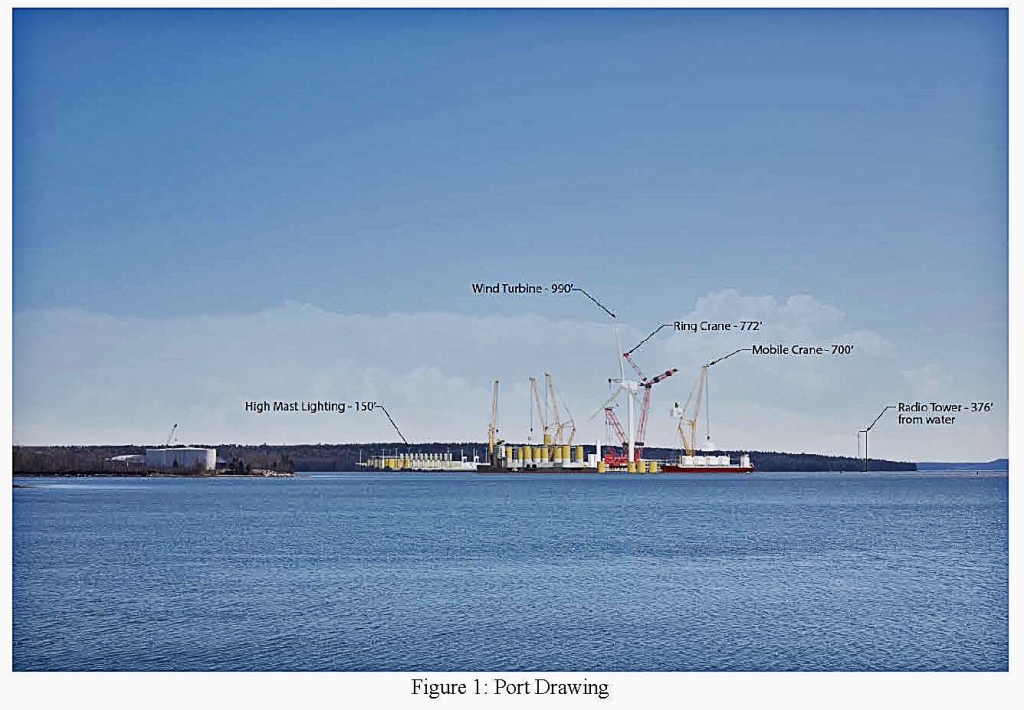
This?
The Maine Department of Transportation applied for a $456 million grant to develop a floating offshore wind facility to manufacture floating foundations and assemble wind turbine
generators on Sears Island in Searsport, Maine. I believe it would be the largest MPD Grant ever granted by the USDOT, larger than the Humboldt Bay award, a more expensive project.
However, what the grant application obfuscates, or fails to mention entirely, are a compelling set of facts that mitigate against this project on Sears Island.
- Mack Point Terminal, 800 yards from the proposed site, is a 105-year-old multimodal terminal, already industrialized, whose owners can reconfigure the terminal to meet the requirements of a new wind port and maintain the capacity for additional opportunities should they present themselves.
- Sears Island is the largest undeveloped island on the East Coast.
- It is a well-recognized, important, migratory flyway that attracts bird enthusiasts from around the world. Over 257 species have been observed on the island.
- The facility, with 15 story pole lighting, 2 – 80 story cranes and 120 story rising turbines will be directly in the migratory path imprinted on their tiny brains.
- Seventy-five acres of carbon sequestering wetlands and upland forest would be destroyed on Sears Island. 2.1 million cubic yards of soil will be extracted and dumped into the ocean to create 25 acres of infill and the rest exported. A new road and railway to the site will destroy even more streams and wetlands.
- There is large, and growing, community and regional opposition to this project on the Island.
- Two thirds of the island is under a Conservation Easement and tens of thousands of people visit the island each year. They believe their access and experience will be forever changed.
- There are historic defenders of Sears Island that have fought to protect the unique ecological characteristics of the island and its valuable contribution to Penobscot Bay as a fish and lobster nursery. They fought a dry cargo port proposed for the same location that the USACE permitted over the objections of the EPA, U.S. Fish and Wildlife and National Marine Fisheries. Numerous lawsuits resulted and the Corps ultimately lost.
- The array of defenders has grown considerably since then, including Public Employees for Environmental Responsibility, and they have the commitment and resources to ensure all reasonable legal remedies are pursued.
- If permitted, lawsuits will likely make moot the grant, if awarded, as the project would likely be unable to meet the 18-month timeline for initiation of construction.
- The facility’s design was predicated on the manufacture of the VolturnUS floating foundation designed at the University of Maine, Orono. It is an obsolete design, patented in 2009, whose deployment was nixed by the LePage administration in 2015.
- There was no transparent due diligence performed in choosing their design.
- There was no competition to assess other, competitive, designs more likely to succeed commercially.
- VolturnUS is too big and too expensive and has a too high a LCOE. (Levelized Cost of Electricity). It just failed phase 2 of the National Renewable Energy Laboratory’s Floating
- FLOWIN) prize competition seeking to find pathways to deployment. It has none.
- The winners all have modular designs that promise serial manufacturing and rapid deployment with more modest port requirements. The VolturnUS design cannot be commercialized.
- The applicant didn’t investigate the port requirements and costs for the assembly of other floating foundations, nor did they find out which foundations have the lowest LCOE, which is the main driver in consumer utility rates.
- Hundreds of millions can be saved using any of the five FLOWIN finalists’ floaters starting with $120 million for a semisubmersible barge than none of them require to launch their floating foundations.
Even a cursory examination will confirm these facts, which is why I am asking you to intervene in the grant process and require that the Maine Department of Transportation amend their application to site the project on Mack Point and reduce their request by $200 million.
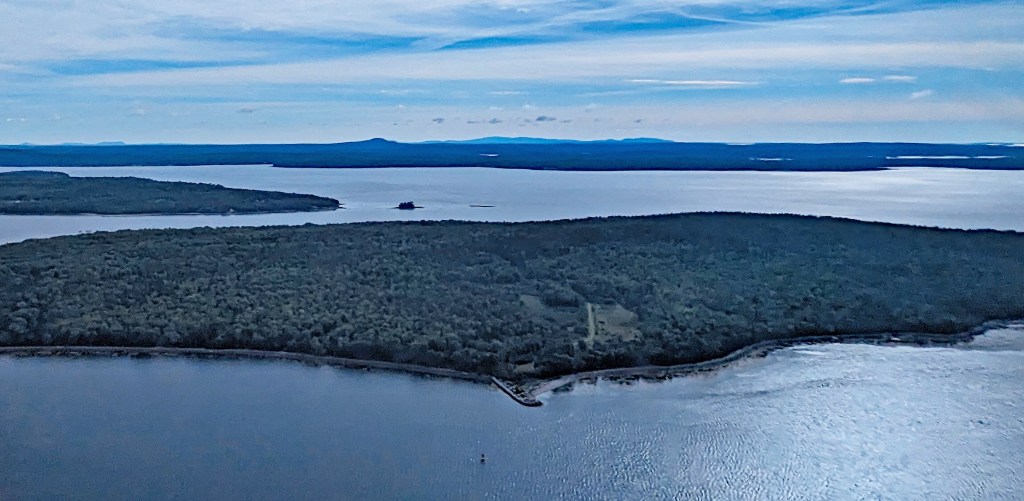
Or This?
We believe that we need to decarbonize our power generation in an affordable manner and hope that Floating Offshore Wind Turbines in Maine can be part of the solution. But it seems absurd to destroy the environment in order to save it.
We need your help. Thank you for your attention.
Regards,
David Italiaander, Searsport, ME 04974
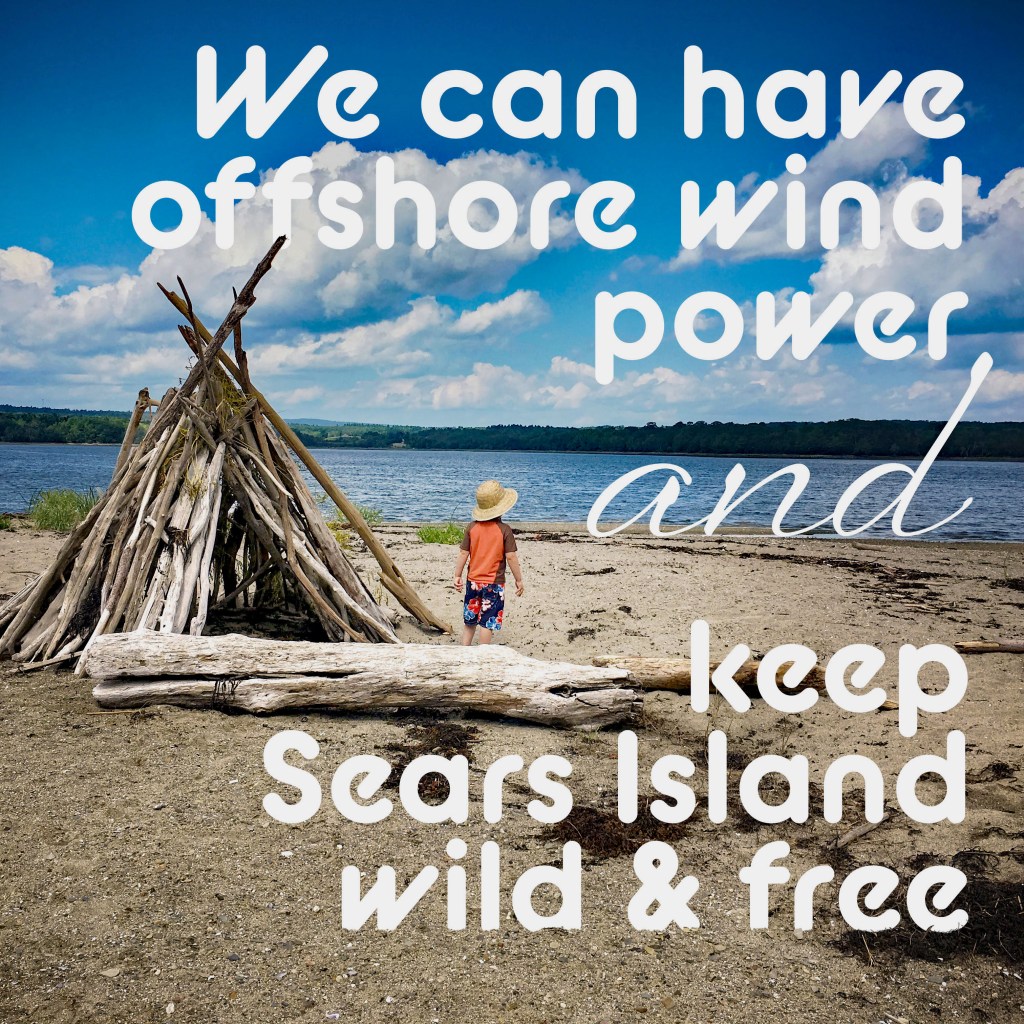
REMINDER: Send Your Offshore Wind Comments
Please submit your comments about offshore wind port siting to the GEO at geo@maine.gov before June 21, 2024.
Insist that the State of Maine: (1) purse the least environmentally damaging alternative, (2) favor repurposing outdated industrial and/or energy sites for the proposed facility, (3) avoid damaging undeveloped and ecologically significant locations, (4) heavily factor climate change impacts, and (5) consider impacts on wildlife and fisheries, when developing any offshore wind port. These ensure the greatest good for Maine.
 Alliance for Sears Island