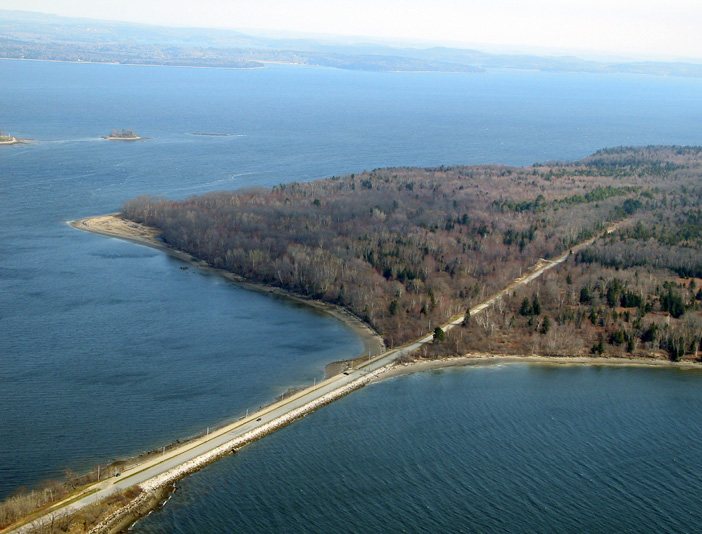
Saving Sears Island from unnecessary destruction represents the epi-center of the climate change crisis.
The E.O. Wilson Foundation (https://eowilsonfoundation.org/what-is-the-half-earth-project/) reports that:
“The ongoing mass extinction of the natural world ranks with pandemics, world wars, and climate change as among the greatest threats that humanity has imposed upon itself. [We] risk the stability of the planet today and for all future generations.”
In the book Bright Green Lies: How the Environmental Movement Lost Its Way and What We Can Do About It (Politics of The Living) by Derrick Jensen, Lierre Keith, Max Wilbert, they point out that:
“Nature is really smart. It created these wonderful means to store and transfer energy, called, for example, ‘fish in the river,’ and we’re destroying them… Modern industrial civilization is rapidly destroying the planet… Sane people recognize that destroying land for major infrastructure projects is not sustainable, no matter how it is branded.”
Locating an offshore wind manufacturing, assembling and launching facility simply cannot use an outmoded, business-as-usual approach to decision-making. To get this decision right means fully embracing the indisputable fact that humans are part of nature. Destroying Sears Island, when a viable and arguably better alternative exists, flies in the face of a climate-change-informed decision.
Caitlin Morgan, Kristian Brevik, Lindsay Barbieri and Joe Ament, in their research article titled Humans in/of/are nature: Re-embedding reality in sustainability sciences, point to the fact that:
“Biology, physics, Western social theory, and Indigenous scholarship all tell us that we are embedded in the natural world; to operate otherwise is a dangerous misconception and leads to the human-centered ecological crises we currently face.”
To prevent further environmental damage and slow or reverse climate change, we need to shift priorities away from economic growth based on GDP and toward frameworks and budgets that advance human well-being and use finite natural resources wisely.
Headlines this week reinforce the importance of making business decisions that respect the greater ecological community in which we live, and the devastating consequences of failing to do so.
The global CrowdStrike outage prevented thousands of people from buying food (https://www.wired.com/story/microsoft-crowdstrike-outage-cash/ and https://theconversation.com/massive-global-it-outage-hits-banks-airports-supermarkets-and-a-single-software-update-is-likely-to-blame-235107) because of a defective piece of computer code.
Meanwhile, faulty manufacturing and quality assurance failure caused an offshore wind turbine blade to break apart and send dangerous debris into the Atlantic Ocean and onto Nantucket beaches. While assessment of the human and environmental impacts caused by this failure continues, that pieces attached to the blade exterior contain Teflon, a common PFAS material, is profoundly troubling and raises the possibility of deep and lasting environmental contamination.
All available expert engineering undertaken to look for an offshore wind manufacturing, assembling and launching site indisputably shows that a robust offshore facility can be built at Mack Point and that the facility there can achieve Maine’s laudable offshore wind objectives.
Sears Island in its current undeveloped state draws back carbon from the atmosphere; supports our fishing, aquaculture and nature-based industries; provides habitat for a wide range of species; and demonstrates the inter-related nature of life-systems. Leveling vegetation, harvesting 2 million cubic yards of soil, burying living freshwater wetlands and marine habitat, dissecting wildlife habitat with a new, heavy-load road and rail access corridor grossly ignore the benefits of Sears Island’s essential ecology.
Let’s get this climate change response right. Support responsible development of an offshore wind facility at Mack Point and oppose the development of such a facility at Sears Island, if any such facility gets built in Penobscot Bay.
Steve Miller
 Alliance for Sears Island