The Sprague Alternative
Editor’s Note: This piece is the sixth in our series on issues raised or missing from the Draft Alternatives Analysis (the AA). The flawed, limited and frequently erroneous MDOT consideration of what has become known as the Sprague Alternative demonstrates extreme bias.

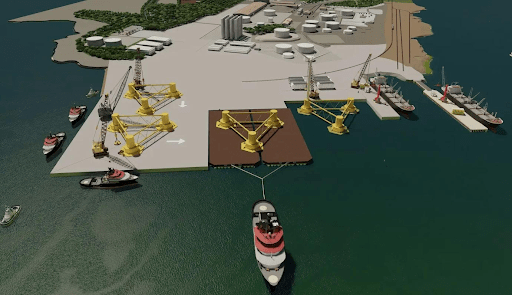
Figure 1 Sprague Alternative Concept Plan
The “Least Environmentally Damaging Practicable Alternative”
Federal Clean Water Act 404(b)(1) Guidelines and the National Environmental Policy Act (NEPA) require that projects impacting wetlands, such as MDOT’s proposed manufacturing, assembling and launching offshore wind facility, “evaluate practicable alternatives to determine if the applicant’s proposed project is the least environmentally damaging alternative.”
The Draft AA falsely concluded that the Sprague Alternative “failed to meet fundamental requirements for a successful port due to multiple operational and practical concerns involving a problematic port layout.”
Problematic Claims
For example, the AA claimed that the location of necessary large cranes in the Sprague Alternative conflict with other operations at the proposed facility. This is simply untrue, as a close look at the proposed Sprague Alternative indicates. Cranes in the preferred Sears Island plan are closer together than those in the Sprague Alternative.
Without proof, MDOT called rail crossings problematic in the Sprague Alternative. In fact, the existing rail connection at Mack Point enhances the value of that project location for delivery of goods and components. The Sprague Alternative even includes a new rail spur to the north of the site for delivery of steel.
Both the Sprague Alternative and the preferred Sears Island Alternative require extensive but comparable filling of marine wetlands. However, the extent of damage to freshwater wetlands soars in the Sears Island plan while the Sprague plan poses minimal freshwater impact.
The Sprague Alternative requires limited dredging of marine sediment to create greater depth between the southern side of the quay and the channel entry. However, The Sprague Alternative requires considerably less controlled dredging than the AA claims. The AA grossly mischaracterizes the impact of Sprague Alternative dredging by comparing it with a massive 2013 proposed dredging and disposal plan that would have employed open-water disposal of sediment into prime lobster habitat and extended the Mack Point entry channel by 2,000 feet.
The Sprague Alternative’s loading capacity at the quay for assembling and launching the turbines matches the loading capacity of the Sears Island Alternative, though the AA inaccurately claims otherwise.
Other misleading claims about the Sprague Alternative found in the AA regarding expandability, wharf directionality and linear configuration, site elevation issues, and costs demonstrate an alarming willingness to obscure empirical facts about the constructability and operational functionality of the Sprague Alternative.
Optimal versus Practicable
It appears that, when reviewing the Sprague Alternative, MDOT applied an “optimal” or “most desirable” filter rather than a “practicable” one. Both online Cambridge and Oxford Dictionaries define practicable as “feasible.” During a November 2023 public meeting in Searsport, a MDOT engineering consultant called the Sprague Alternative “viable, just not optimal.”
Beyond Practicable
And then, “practicable” alone is not sufficient under federal law; the “least environmentally damaging, practicable” alternative must be identified.
While the AA acknowledged the omission of almost all environmental impact considerations, environmental research by consultants attached to the AA could and should have been discussed and incorporated into this analysis, even if acknowledged as incomplete. In February 2024, Governor Mills claimed preference for developing Sears Island based on “environmental impact,” among other reasons. If the Governor based her preference for developing Sears Island in February 2024 after analyzing environmental impact of alternatives, as she claimed, then certainly the Draft AA released 8 months later should have included known environmental impacts as well.
Bias
NEPA and 404 regulations demand an unbiased analysis of alternatives. Evidence shows that MDOT is not unbiased. This MDOT bias resulted in dismissing the Sprague Alternative “for failure to achieve key operational requirements for an OSWP,” which the record shows is simply untrue.

Conclusion
Evidence on record proves that MDOT decided to locate the offshore wind manufacturing, assembling and launching facility on Sears Island as early as 2021, consistent with decades-long interest in developing a Sears Island port even in the absence of need.
MDOT, then, rejected the Sprague Alternative using a prejudicial analysis of facility needs and insufficient consideration of environmental impacts.
Climate change demands immediate response on many fronts, including enormous reductions in carbon emissions from energy production and use. Climate change response elevates the “least environmentally damaging” code to a level of imperative perhaps never more critical than today. Consequently, we find DOT’s rejection of the Sprague Alternative in the draft AA clearly inappropriate, socially irresponsible, and bordering on criminal against future generations.
Steve Miller
 Alliance for Sears Island